Context & briefing
BlueRange is an application for facility managers to monitor buildings and maintain automation devices such as sensors (movement, temperature) and actors (curtains, heaters). As product designer, I was responsible for defining consistent interaction patterns, creating a design system, and integrating new product features.
The Solution
I defined consistent interaction patterns for creating and editing elements, building navigation, and table-based device management. Additionally, I integrated new features such as an occupancy management concept, a device maintenance notification system, and user group management for end-user apps, extending the product offer and making the product easier use.
Project details
Client
MWAY
Duration
12 months
UX role
UX/UI designer
Design process
Analysis
- Field research on IoT
- Current UI inventory
Design
- Creation of UI components
- Navigation concept
- Interaction patterns for tables
- Notifications concept
- Room & zone mapping
- Occupancy management concept
- Administration and group management
Evaluation
- Internal stakeholder concept evaluation
- Continous heuristic evaluation through peer UI designers
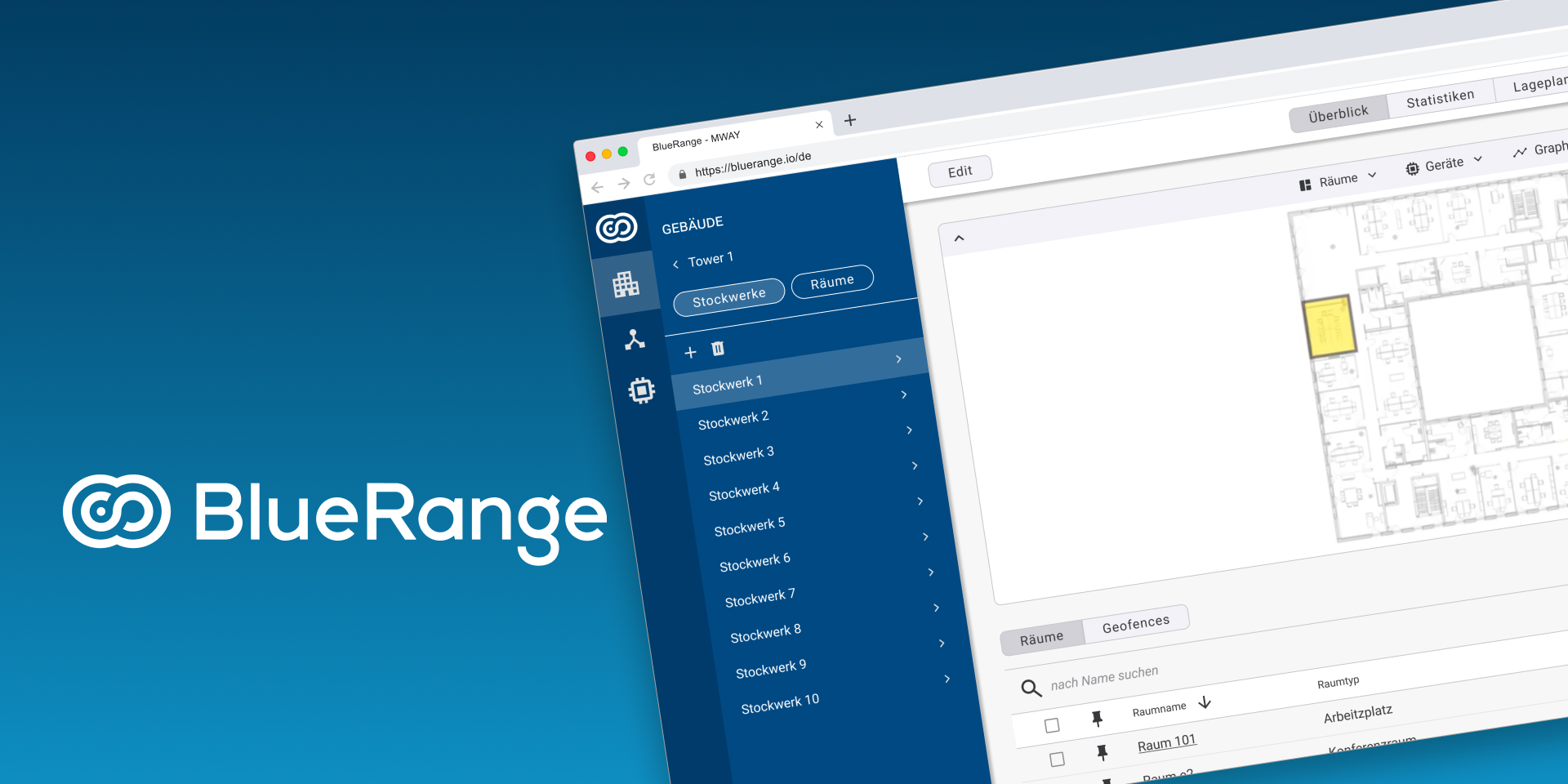
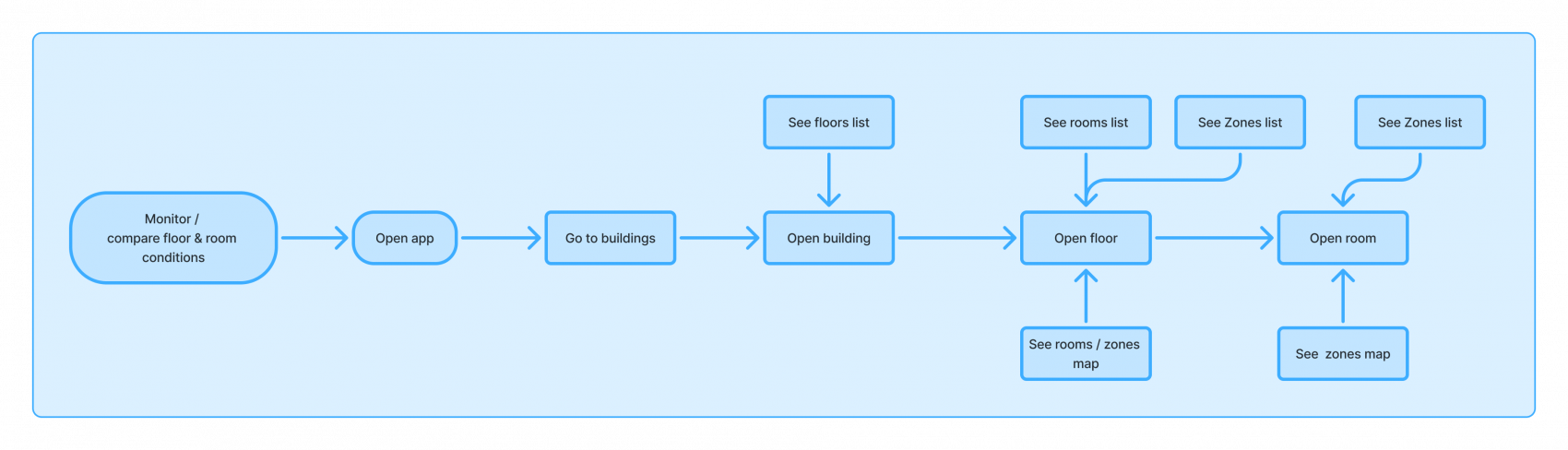
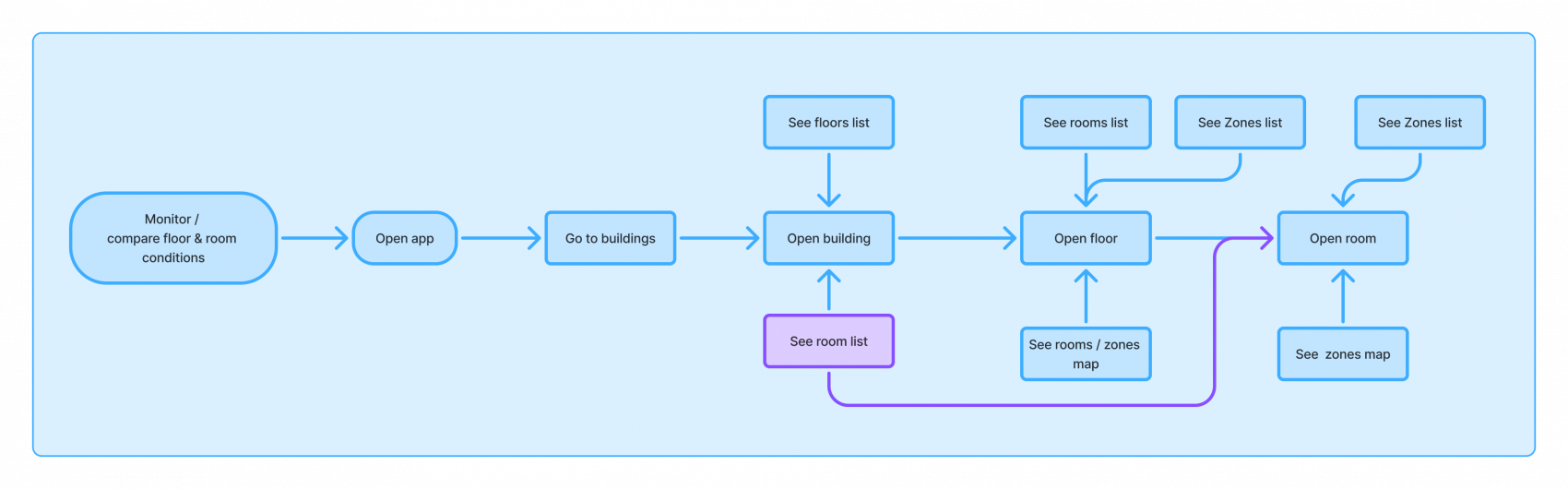
1. Floor / Room navigation concept
I was asked to redesign the application’s navigation to help facility managers more easily explore and compare room and floor conditions within a building. The goal was to enable cross-floor comparisons of all rooms and to provide clear orientation, so users always know which room and floor they are currently viewing.
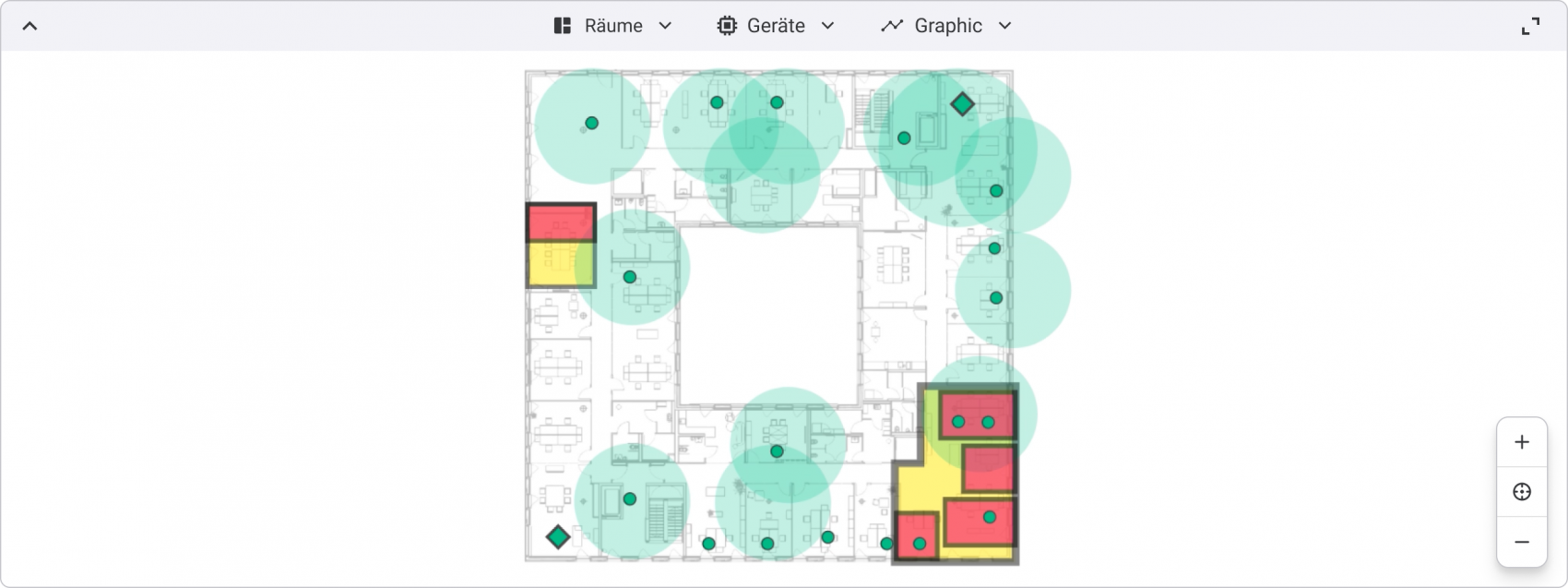
2. Room and zone mapping
I defined interaction patterns that allow users to create and adjust room and zone boundaries on floor plans, and to visualize and manage the locations of automation devices within each space. I also designed controls to activate or deactivate real-time data overlays on the map, such as movement and temperature graphs, and defined a color concept to ensure consistent and intuitive visual feedback across the graphics.
3. Occupancy management concept
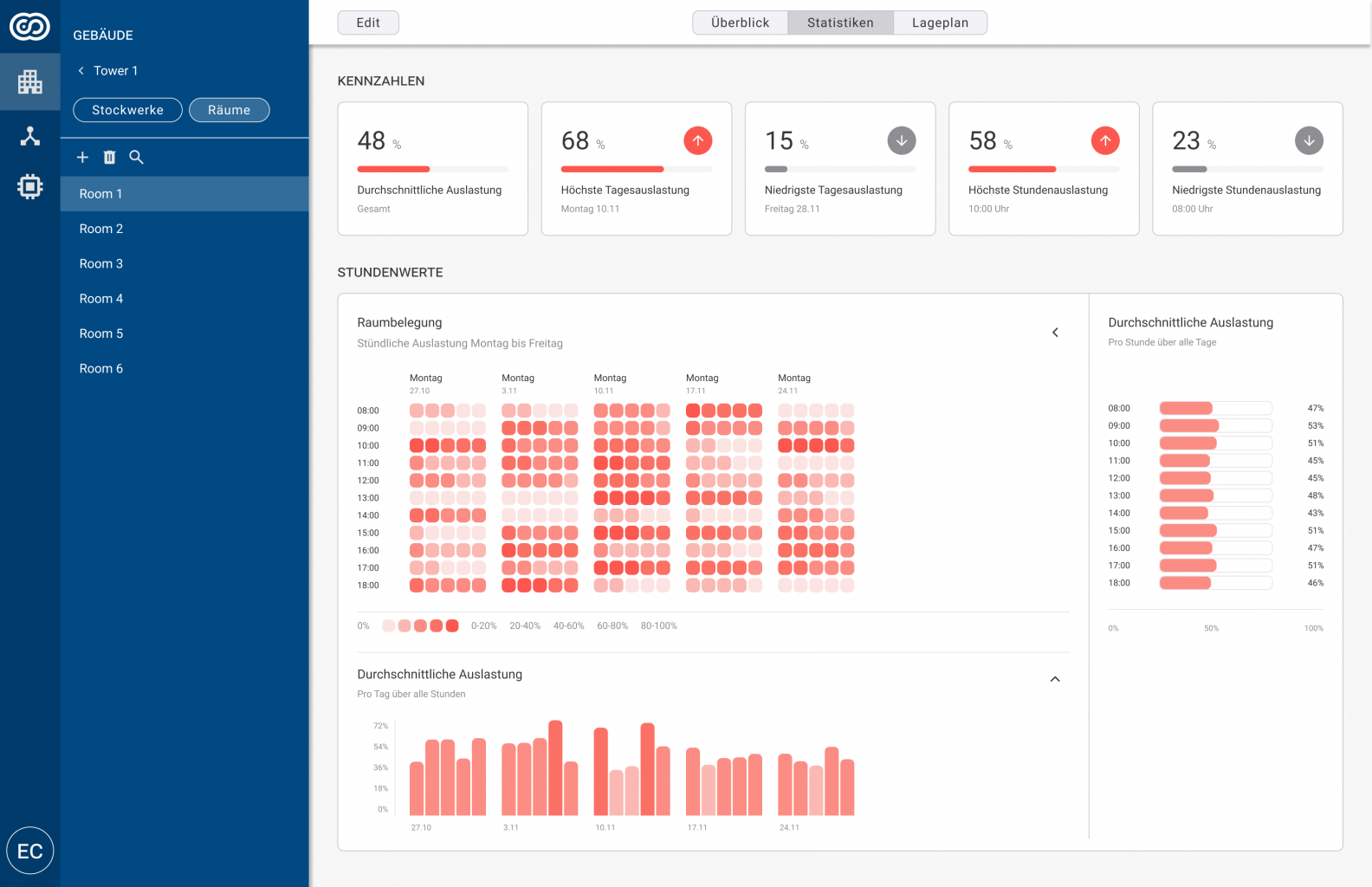
Using data from movement sensors and room bookings, I defined a concept that enables facility managers to visualize room and floor occupancy. This allows them to make informed decisions about renting more or less office space for their company.
Learnings
Working closely with front-end developers taught me how to translate design specifications into pixel-perfect interfaces and strengthen design–development alignment. Collaborating with graphic design colleagues helped me refine my eye for detail, invest time in crafting well-balanced color palettes, and stay aware of evolving UI trends.
Through this experience, I realized that every organization has its own understanding of UX practices. I learned the importance of negotiating early which activities will be part of a project to ensure time for usability testing and to be involved from the discovery phase, aligning user needs with product priorities from the start.