Briefing & challenge
The Lucas App is a client-specific mobile application within a broader smart building ecosystem that connects office users with automation features. It was commissioned by a landlord of automated buildings to provide additional value to his tenants. As UX/UI designer, I was responsible for extending the app with new features while keeping navigation clear and simple.
The Solution
The project resulted in an extended version of the Lucas App that offered office employees a more connected and efficient experience within automated buildings. The improved room booking workflow and the addition of maintenance reporting and colleague location features gave the client a concrete demonstration of how smart building functions could enhance daily operations and tenant satisfaction.
Project details
Client
Mway
Duration
3 months
UX role
UX/UI designer
Design process
Ideation
- Requirements briefing
- Ideation meeting with client
Design
- Improvement for room booking
- Concept for finding people
- Concept for maintenance requests
Validation
- Customer review
1. Room booking improvements
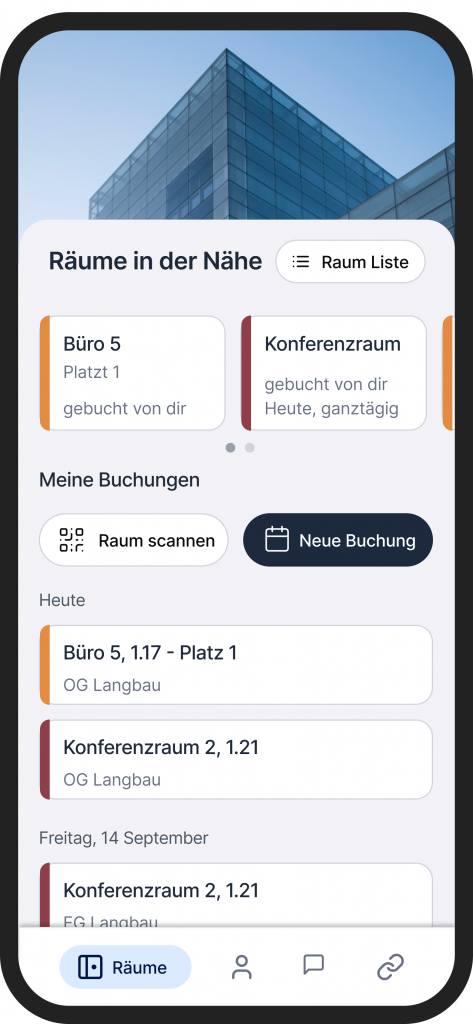
My first task in the Lucas App was to improve the room booking workflow so that users could either start the process from a list of nearby rooms or by first selecting a date and time and then viewing available rooms in their vicinity. This required special attention to breadcrumbs and contextual navigation, ensuring that users could access comparable room lists from different entry points without losing orientation.
2. Mantainance request concept
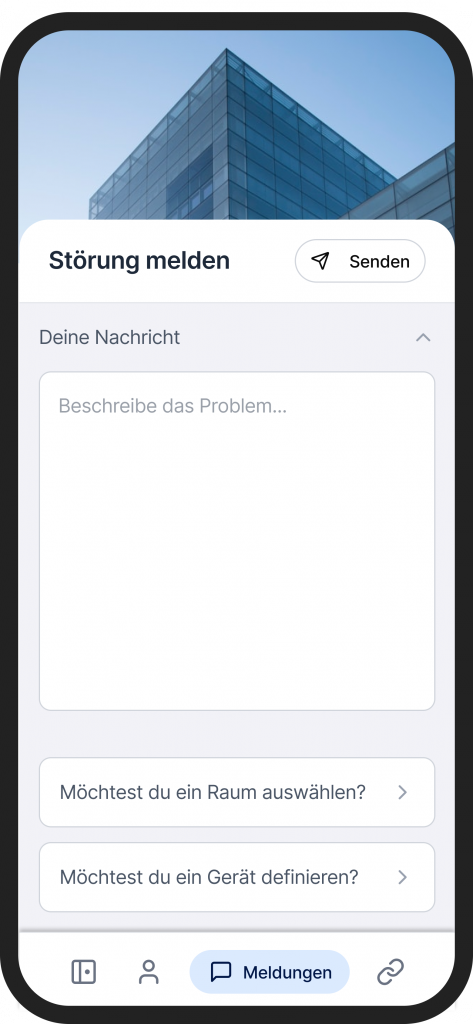
Having previously designed the facility manager app that handled user requests and notifications, I was able to define, from the end-user perspective, how maintenance requests could be communicated to facility managers without requiring extensive text input — while still capturing key details such as the room location and the specific object within the room inventory.
The concept reused the room selection patterns from the booking process and maintained a clear navigation flow back to the request main screen.
3. People location requests concept
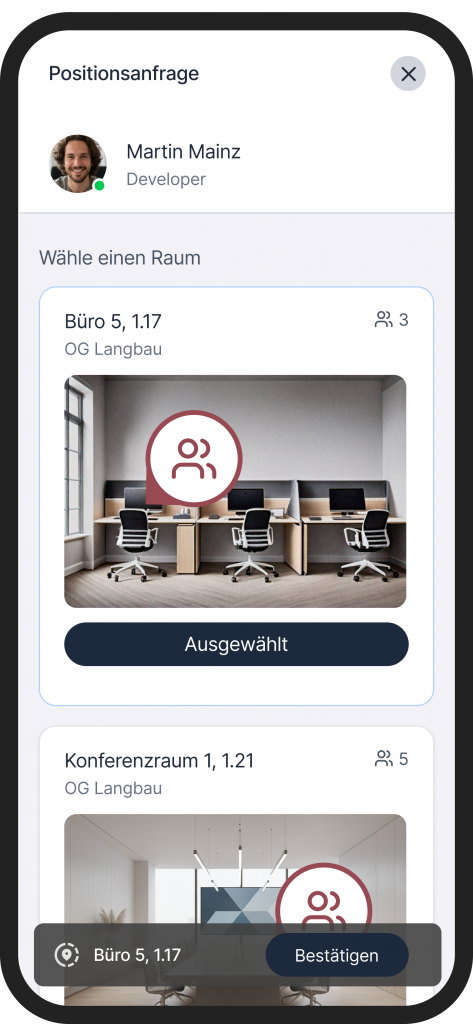
As a proof of concept for future features in the Lucas App, I was asked to define a concept for locating colleagues within large buildings. The idea required integrating Microsoft Office single sign-on, requesting user permission to share their location when a request was sent, notifying them about incoming requests, and allowing them to respond with a timestamp and a selected room where they were located.
Although we didn’t have the opportunity to conduct detailed context-of-use research, the concept was intended to give clients a clear idea of potential future developments. The general workflows were designed to be logical and lead users along a happy path, while still considering possible edge cases.
Learnings
Through this project, I learned how to design coherent navigation workflows for complex mobile applications with multiple entry points leading to similar, reused lists. Defining these paths required careful attention to orientation, context, and hierarchy to ensure users always knew where they were and how to return to their main tasks.
I also deepened my understanding of working with mobile-specific layouts and bottom navigation patterns, maintaining visual and structural consistency while extending the app with new features.
Additionally, I gained experience working in a short-term, client-specific project context with limited time and user insights — a setting that was new to me after mainly focusing on long-term product design. This helped me understand a different project setup and how to navigate conversations about information needed at project start, without losing empathy for the client’s situation or constraints.
Related articles
-
The project kick-off workshop