Briefing & challenge
BIMSystems founders asked us to identify opportunities where general contractors could benefit from BIM data management, aiming to position them as central partners in product development. The challenge was to deliver immediate value for general contractors while addressing real user needs related to BIM data among their project participants.
The Solution
We identified the opportunity to support consistent attribute management across construction projects. Our solution was a vocabulary tool enabling information managers to track project progress with reliable data, while planners collaborate using a mapped vocabulary. This product idea addressed user needs and positioned BIMsystems strategically with general contractors as partners.
Project details
Client
BIMSystems
Duration
12 months
UX role
Overall UX
Design process
Analysis
- Opportunity workshop with key stakeholders
- Field research in construction processes & standards
- 18 Interviews with planners & managers
Ideation
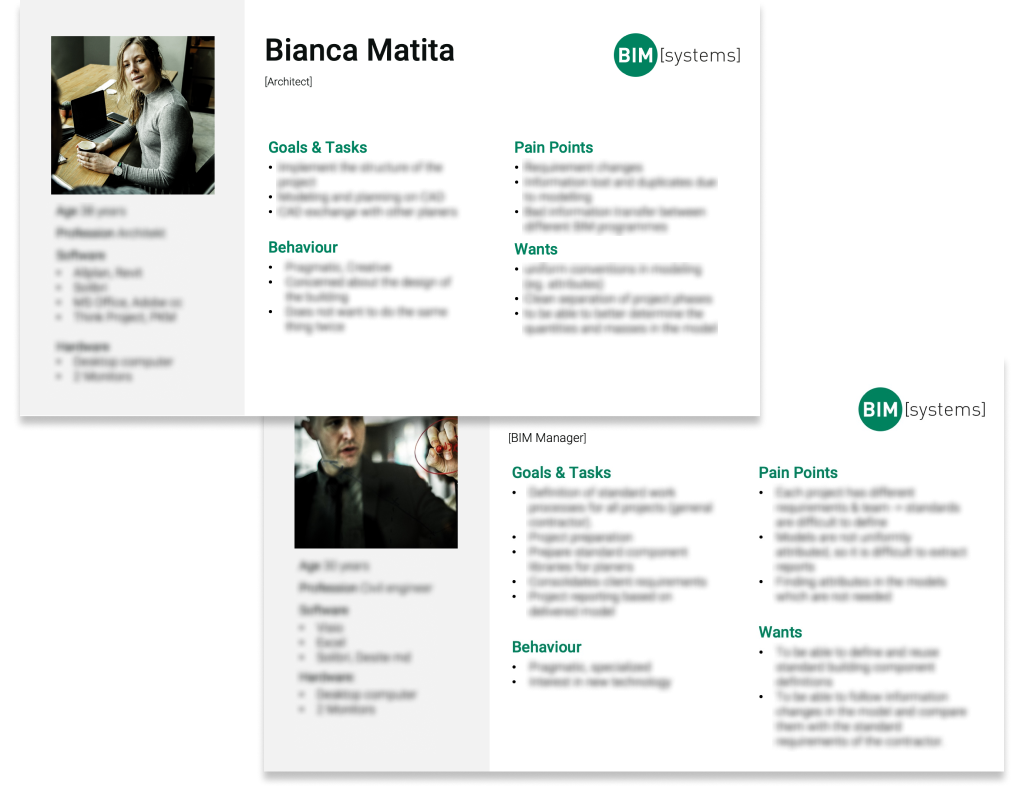
- Key personas & their needs
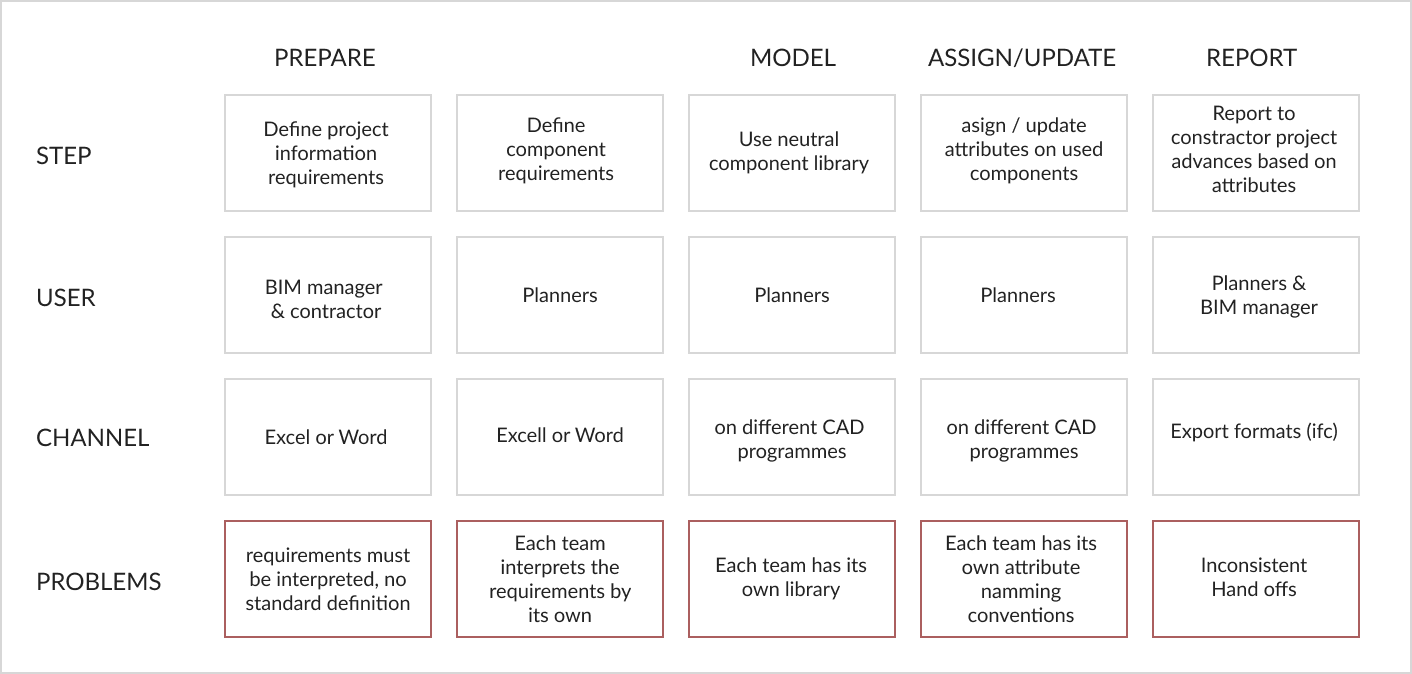
- Process mapping & pain points
- Key solution scenario
- Priotization workshops with key stakeholders
- Product story mapping
Design
- Detailed workflows
- Navigation structures
- Wireframes
- Mockups
Validation
- Focus groups with key stakeholders
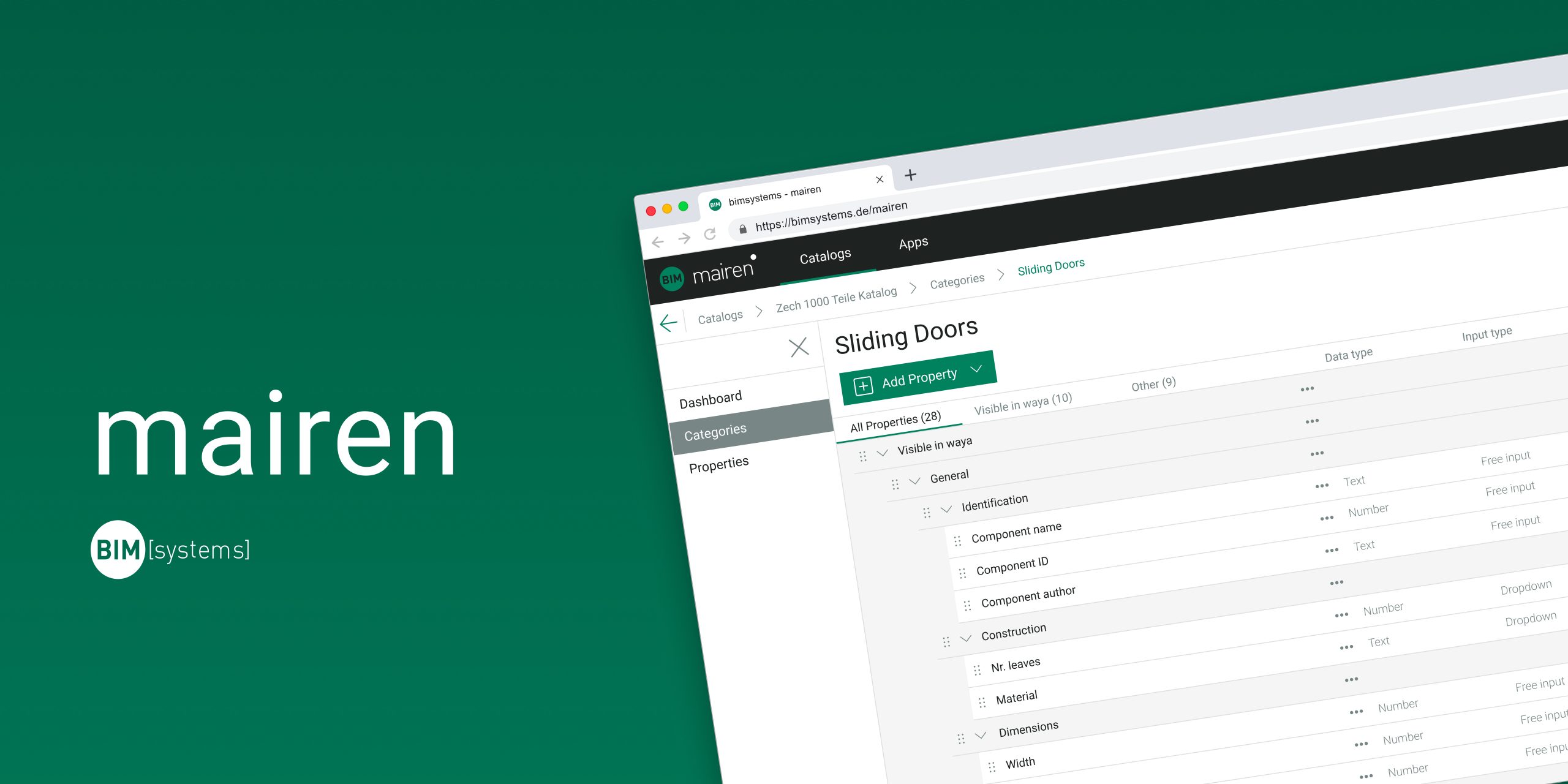
1. Starting the journey
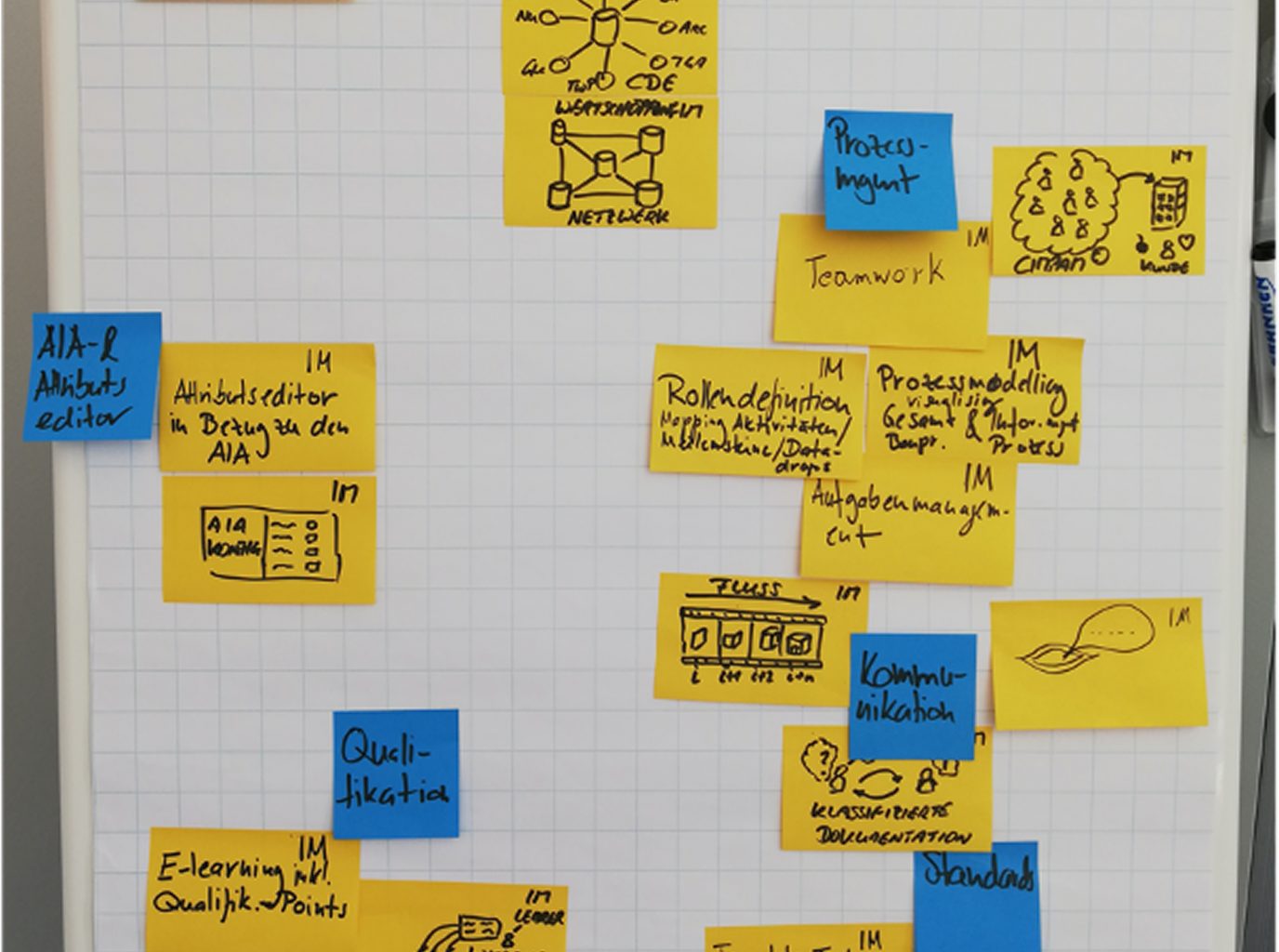
After conducting an opportunity workshop with a key partner, where we defined a showcase for project management collaboration in Waya (another application within the BIMsystems ecosystem), we decided to reframe our workshop findings and explore new product opportunities that could deliver unique value with low development risk. The workshop challenge — “How can we help general contractors make construction processes in complex projects with many stakeholders more predictable and efficient?” — remained the guiding question as we continued our exploration in Mairen.
During the workshop, some stakeholders mentioned an attribute manager as a potential opportunity, but its purpose was not yet clear to us. We therefore decided to conduct additional interviews to understand why this idea could be interesting and what specific needs it could address.
2.Listening to users
Conversations with information managers and planners shifted our perspective. The real challenge wasn’t about using the same components, but about managing the attributes of those components — requirements such as cost, materials, or acoustic values that were difficult to keep consistent across libraries.
Information requirements were typically defined by general contractors, but planners often didn’t fill them in correctly because they used their own internal vocabularies to describe similar properties. This led to frequent misunderstandings, made it hard to track progress and costs, and created friction during project handovers or change requests.
3.Reframing the challenge
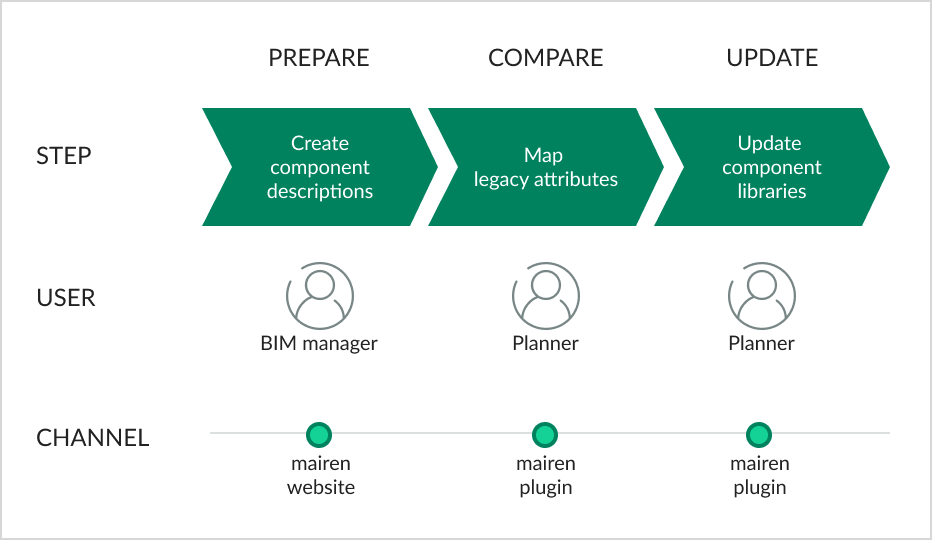
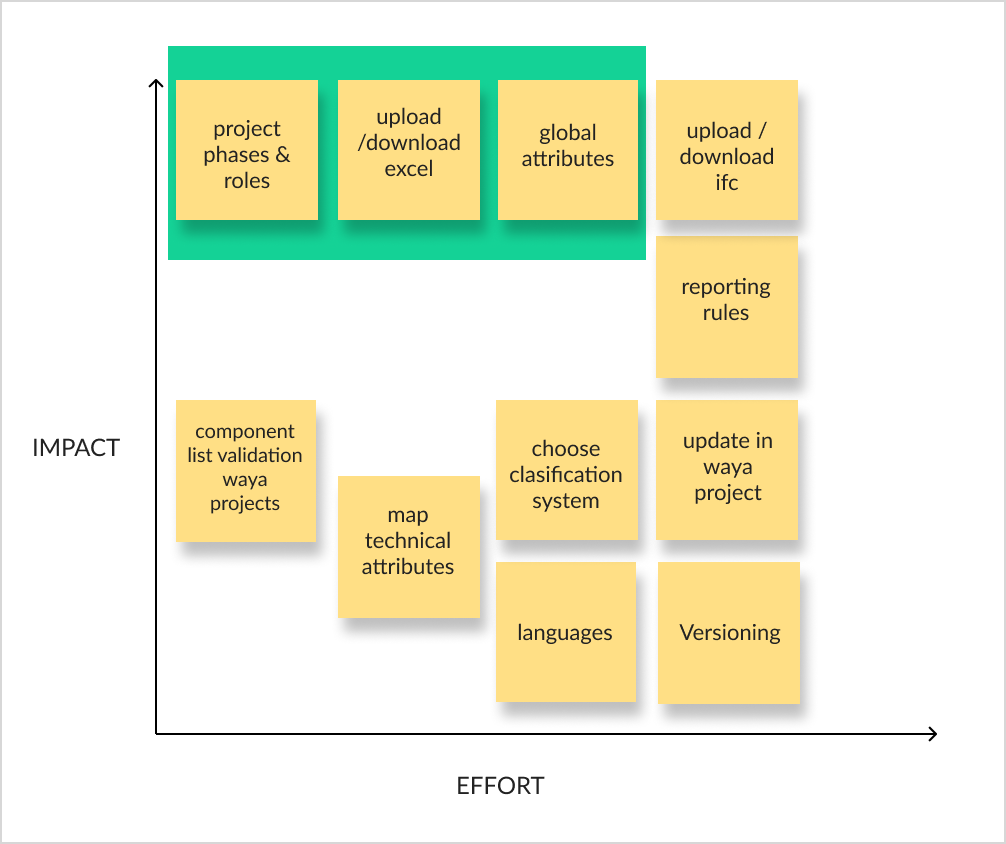
We shifted focus from a generic data management platform to an attribute manager. Together with stakeholders, we defined an improved process for managing attributes and selected the first features for an MVP.
4. Designing the solution
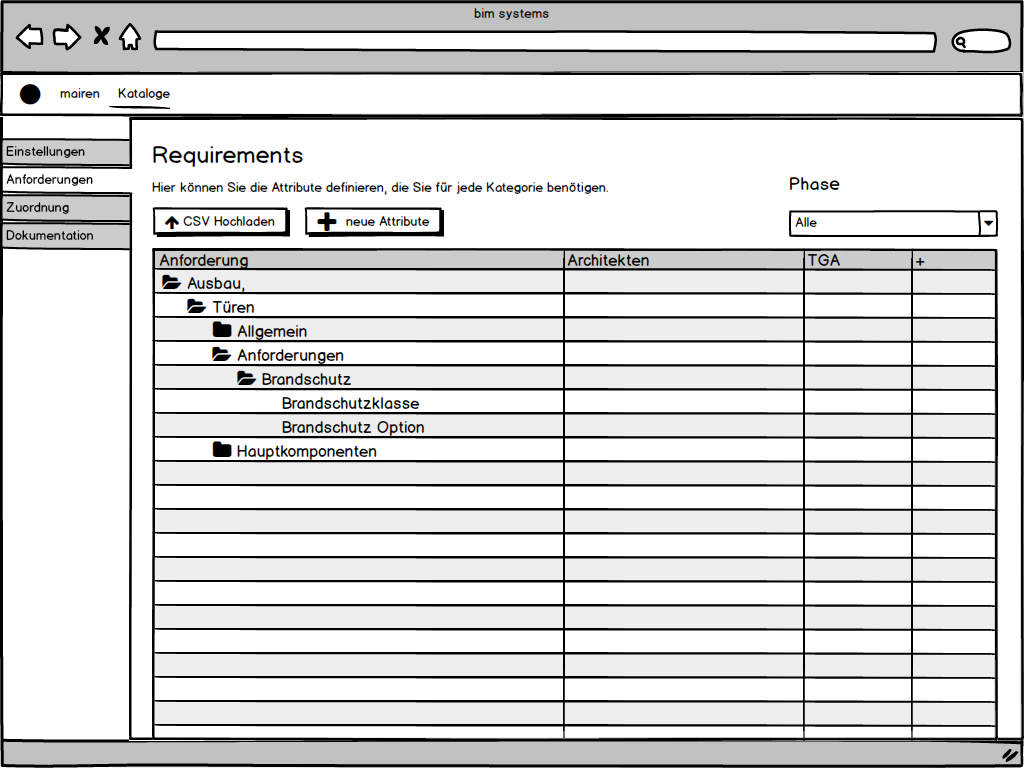
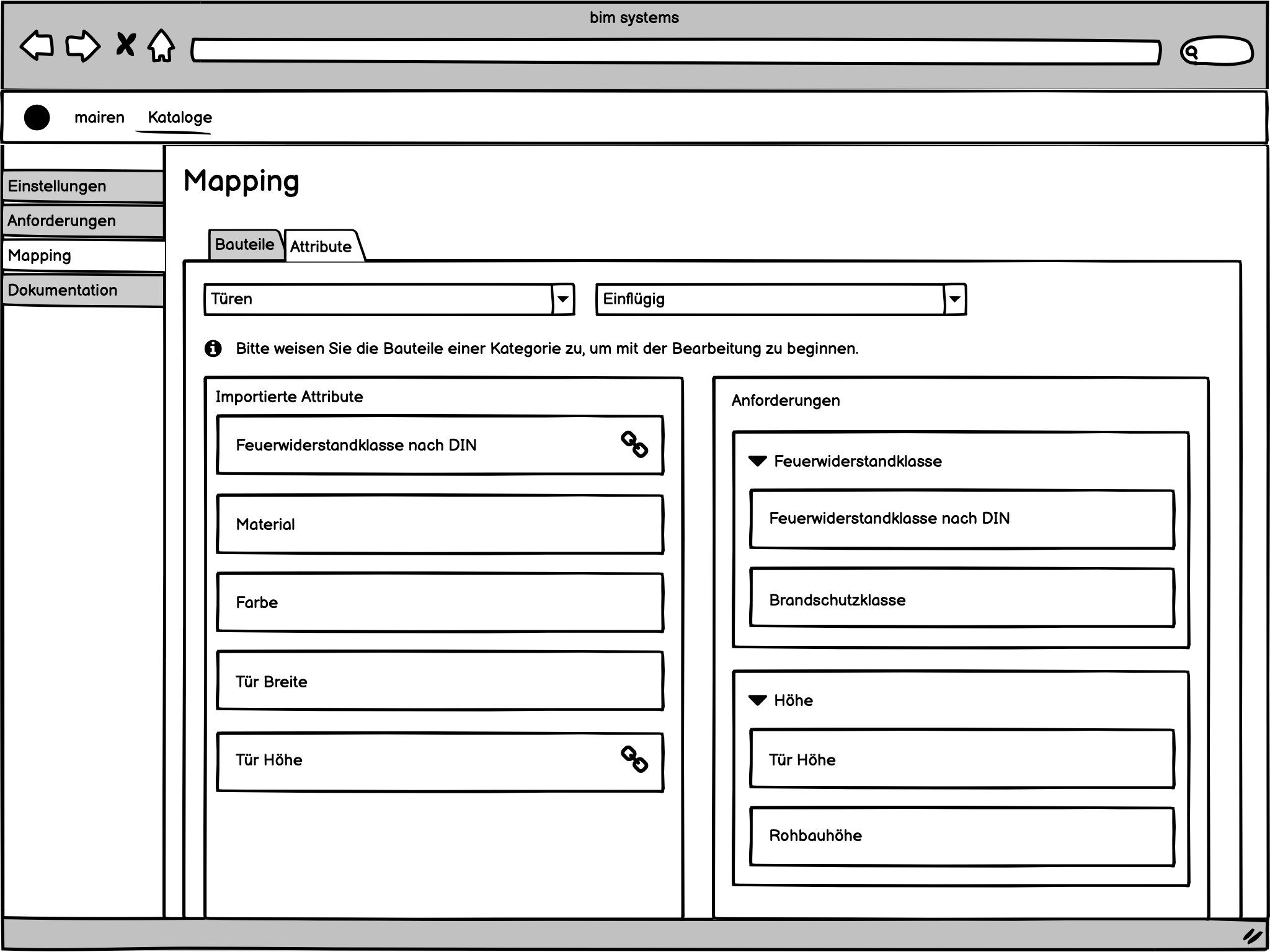
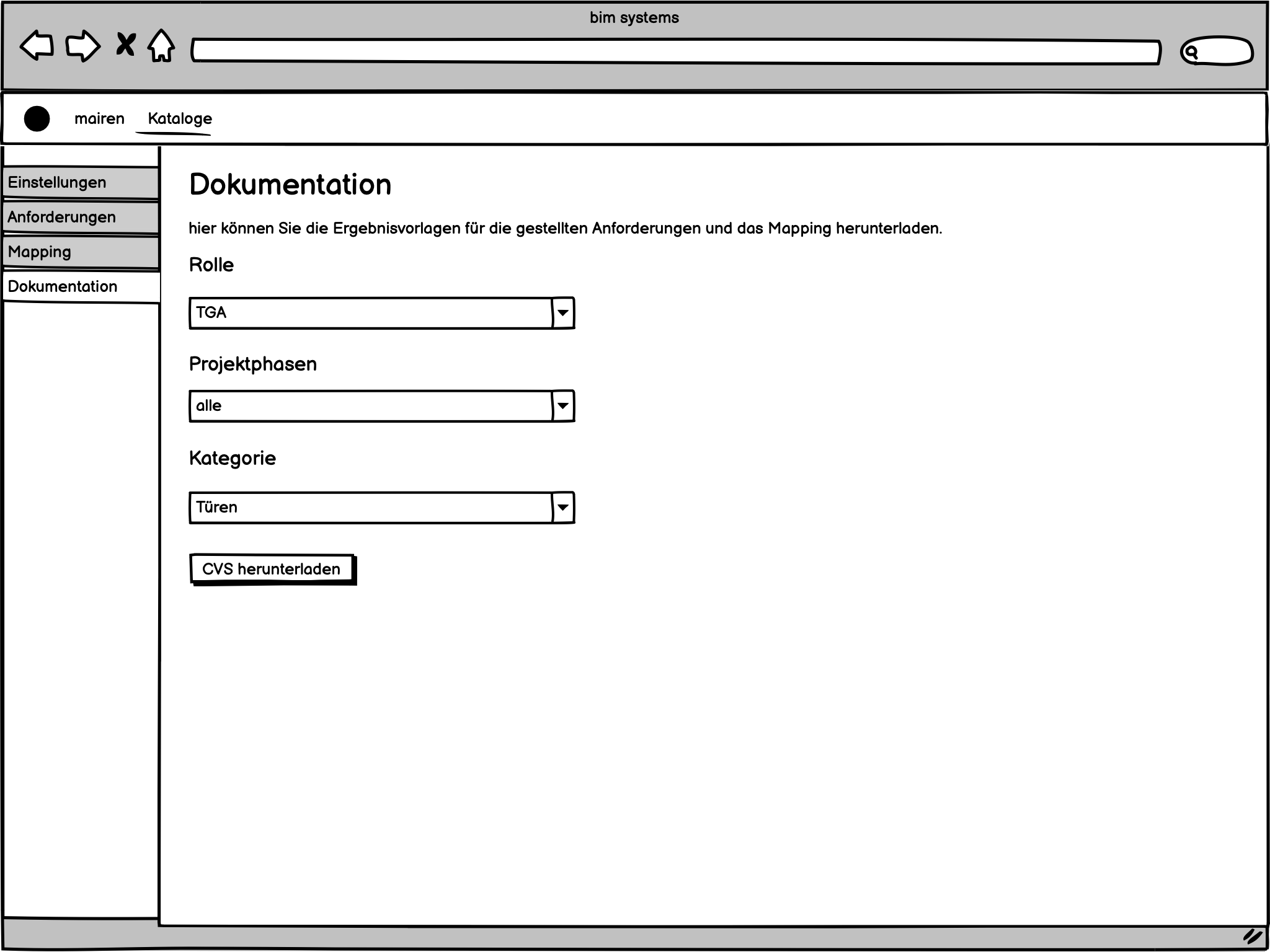
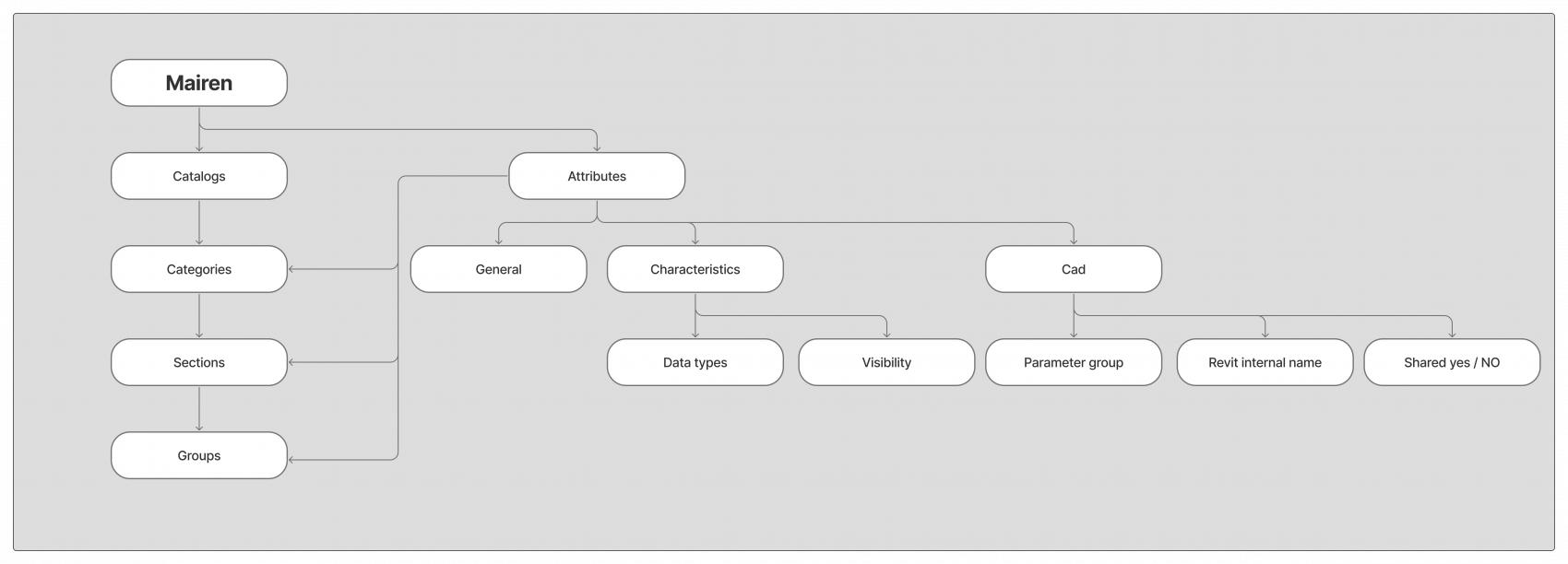
During the design phase, I created several wireframe iterations and gathered feedback through focus groups to refine them. From these sessions, we learned that attributes shouldn’t always be created within a single component but could also be reused globally across projects. This insight helped us improve the app’s overall structure, defining clearer workflows and navigation.
4. An app for several use cases
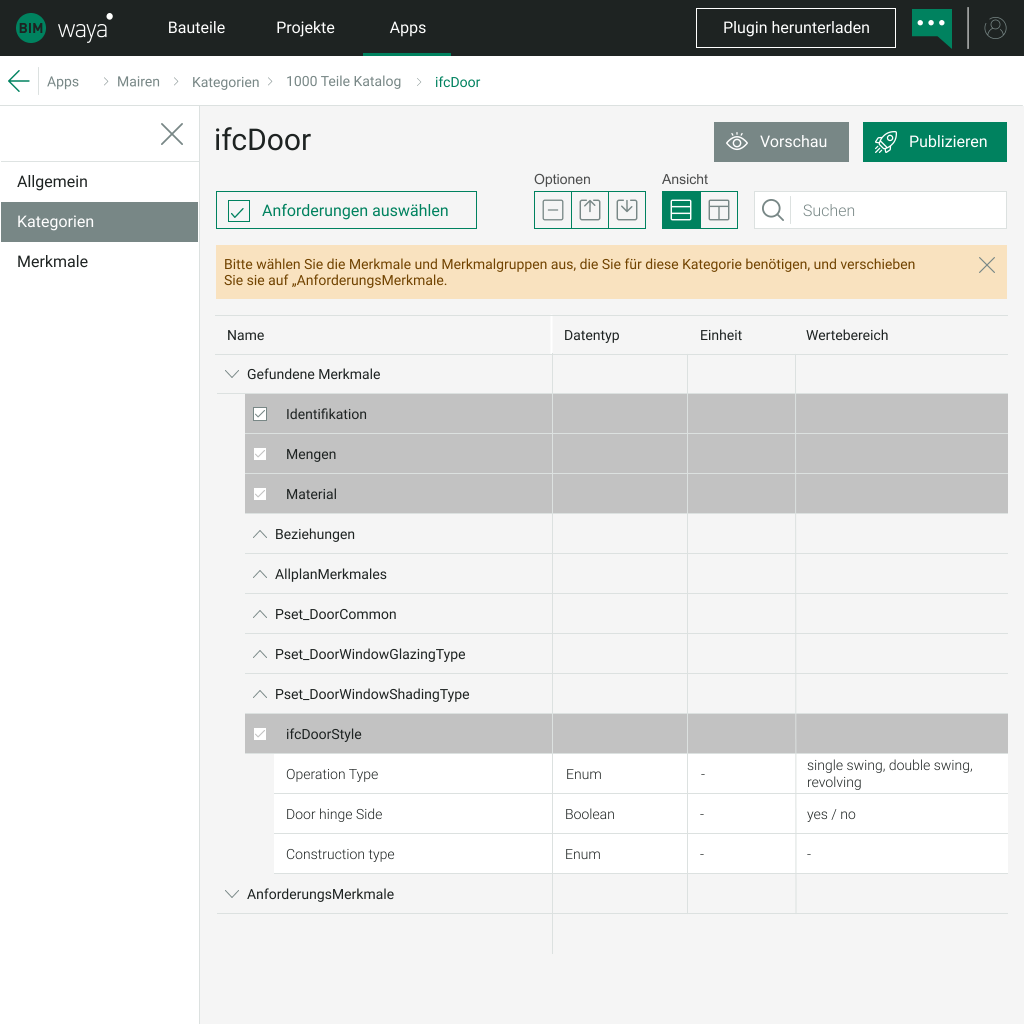
The validated workflows and navigation structure became the foundation of our solution — a vocabulary-driven attribute manager that could be used by planners, information managers, and eventually manufacturers as well. The app enabled consistent and homogeneous data across different stages of the building process.
Impact & outcomes
4 new investors
Our showcase convinced 4 general contractors to invest
Enabling technology
Base for further BIM management tools
4,5 / 5 rating
Feature relevance rated in Survey
Learnings
What I specially learned from this project was to allow users for flexibility in the steps for achieving a goal. According to the feedback we received from Stakeholders, component descriptions can be created both by first defining attributes or first components, the tasks are related, but not dependant.
Concerning the development of mairen, we had limited resources. Therefore we had to learn as a team to define pretty well development scopes. Sometimes we succeeded and sometimes we had to cut off or adapt features. At the end it was important for us to balance between creating a scalable product and showing investors product business goals were achieved.
Related articles
-
Xperience BIM