Briefing & challenge
Manufacturers of construction parts rely on content developers to convert their products into configurable BIM content, helping them stay competitive through accurate digital data. The challenge was to define how Linya, a content management system for construction manufacturers, could support them in efficiently creating, configuring, approving, and publishing their BIM content — while reducing effort and ensuring data consistency.
The Solution
I analyzed how manufacturers create and manage their digital product data and identified ways to simplify these workflows. Building on BIMsystems’ experience as a service provider, I helped transform a customer-specific application into a reusable product that could be offered to other manufacturers — enabling them to create and maintain their BIM content more efficiently and consistently.
Project details
Client
BIMSystems
Duration
8 months
UX role
Overall UX
Design process
Analysis
- Customer journey mapping workshop
- Product strategy workshop
- Manufacturer contextual inquiries
Ideation
- Ideation workshops with manufacturers
- Key personas & their needs
- Content request and development process & pain points
- Current workflows on manufacturer product configurators
Design
- Detailed product validation workflows
- UI structure for validation rules
- Wireframes
- High fidelity Handoffs
Validation
- Cognitive walkthroughs with manufacturer teams
- Show case & survey in BIMworld fair
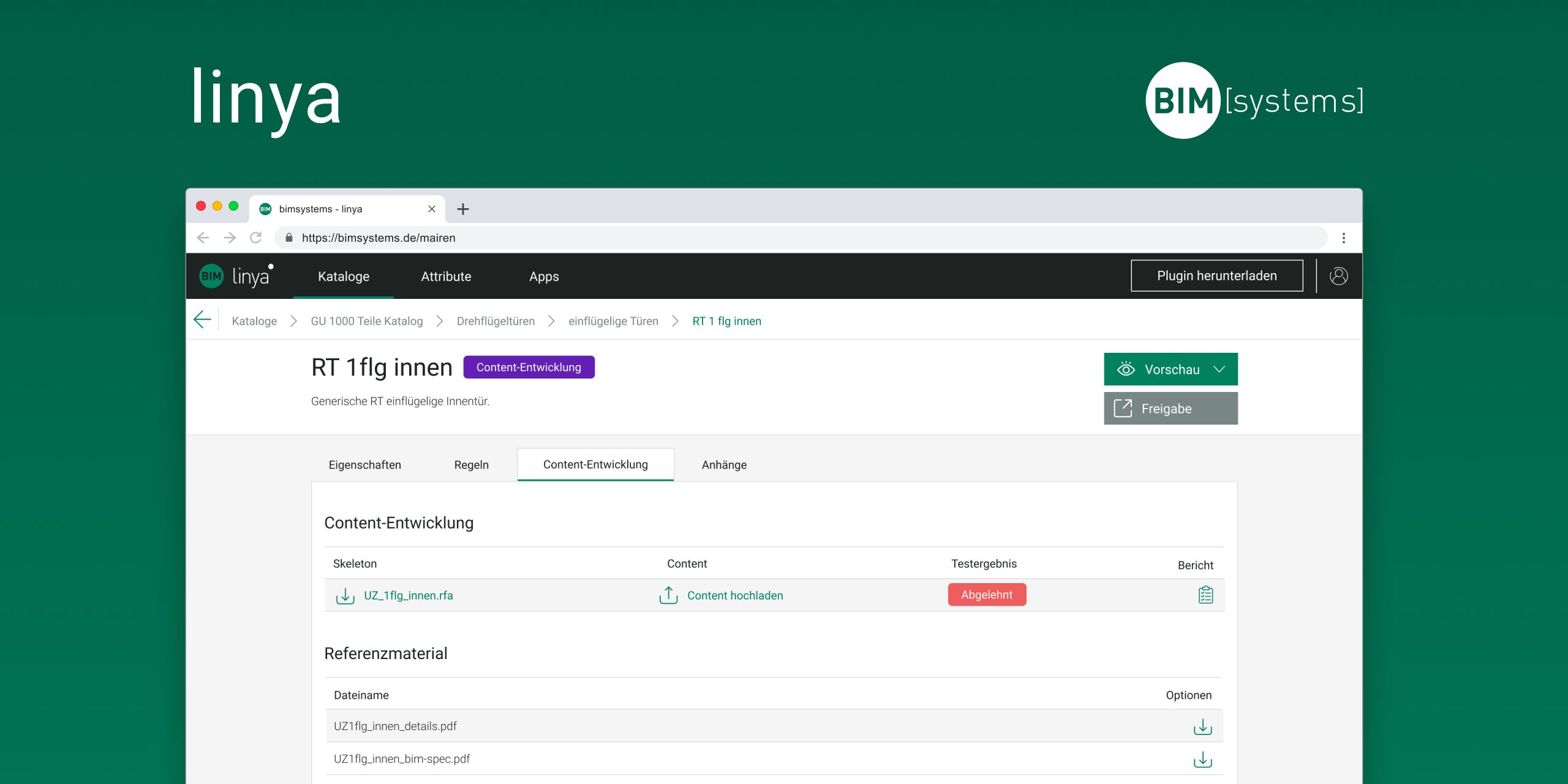
1. Extending a client specific customer project into a reusable product
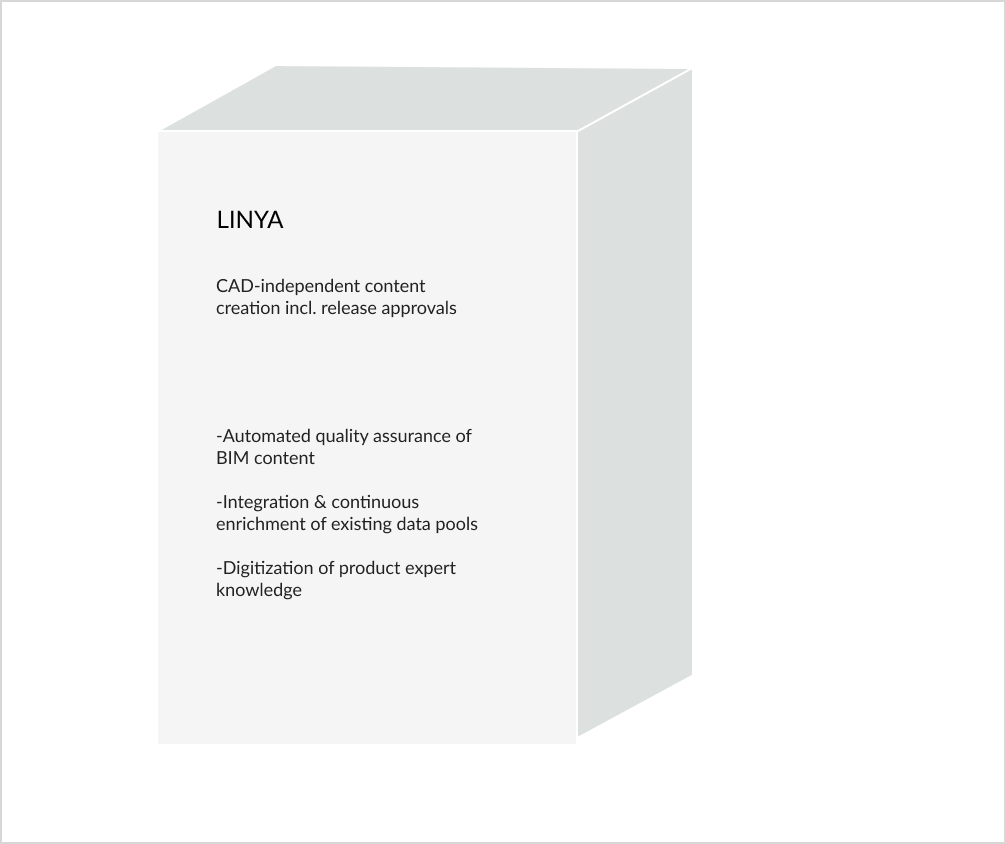
At the beginning of 2018, I initiated a product strategy workshop at BIMsystems to help the team consolidate our product offerings and align them with specific customer groups. We began by mapping out the tools developed so far and analyzing their potential user segments. Through this process, we identified manufacturers as a key target group for whom several existing solutions could be transformed into a scalable product.
Using insights from our proto-personas, we defined a product box, articulated a clear vision for Linya, and outlined its unique value proposition in relation to competitor products.
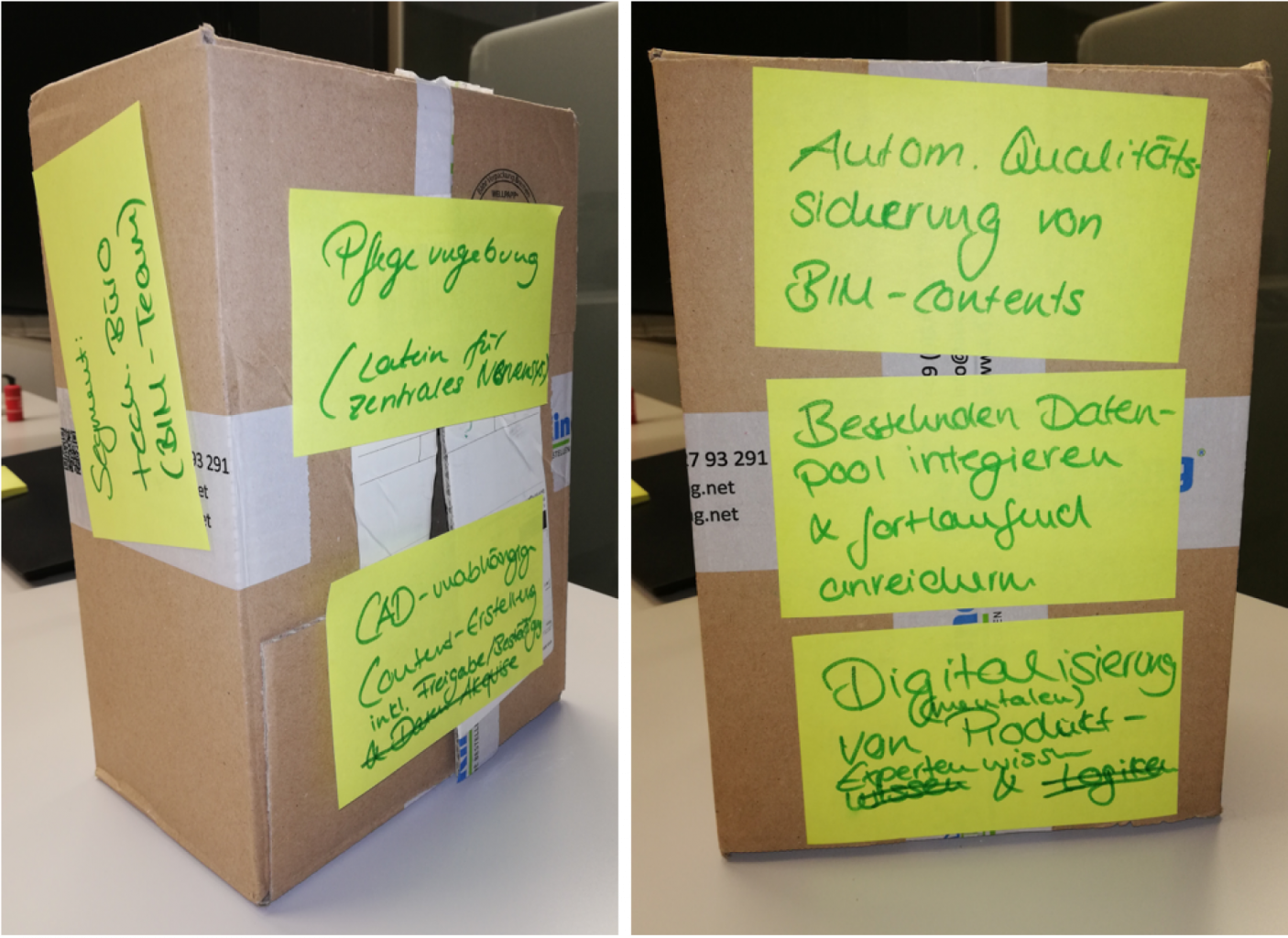
2. Product strategy workshop
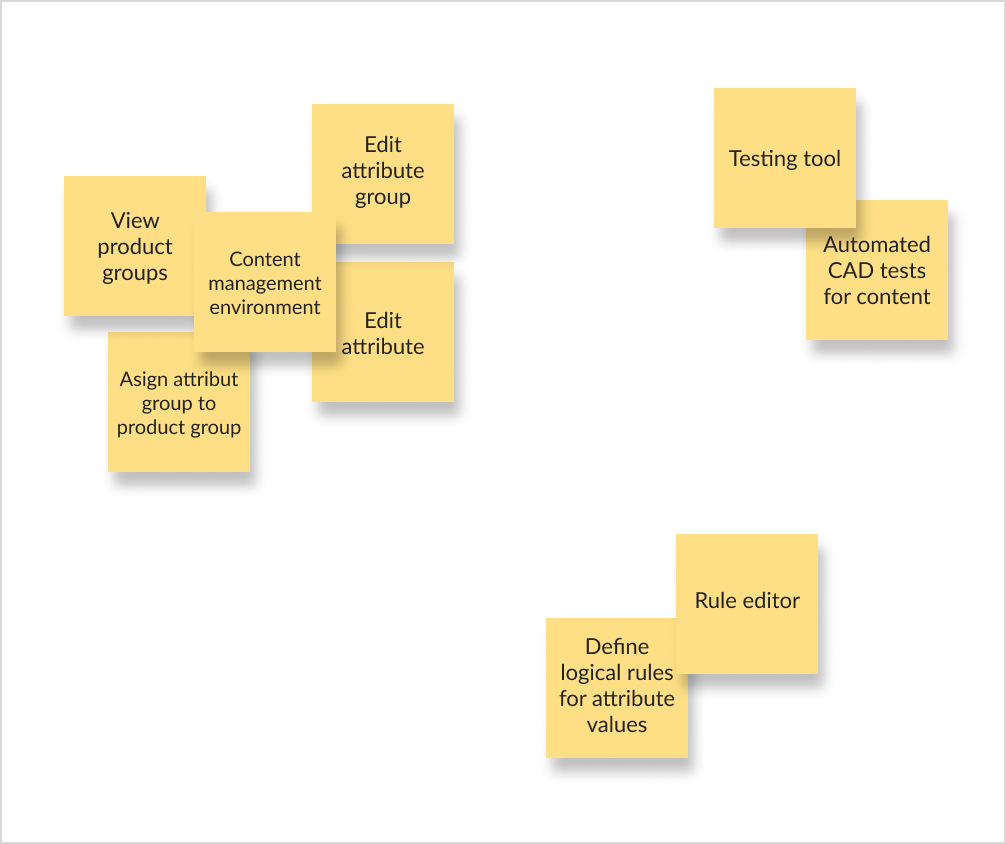
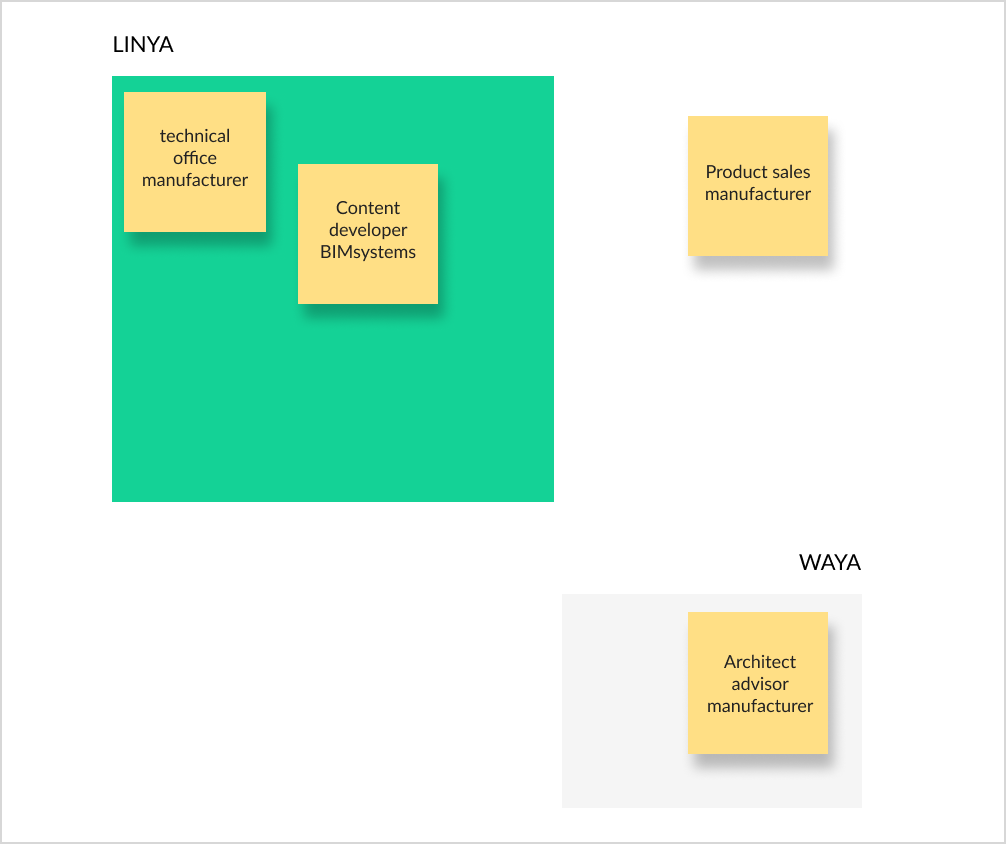
3. Initial wireframes
I created a first wireframe to discuss with a manufacturer user group. In this wireframe I assumed there was a single user (technical office) from the manufacturer side, who used a self service to define his/her orders.
I learned from our meetings with the client, that there were actually several users working on product specifications from different perspectives. We needed therefore, to change this structure, define better the user roles and define a release process for products.
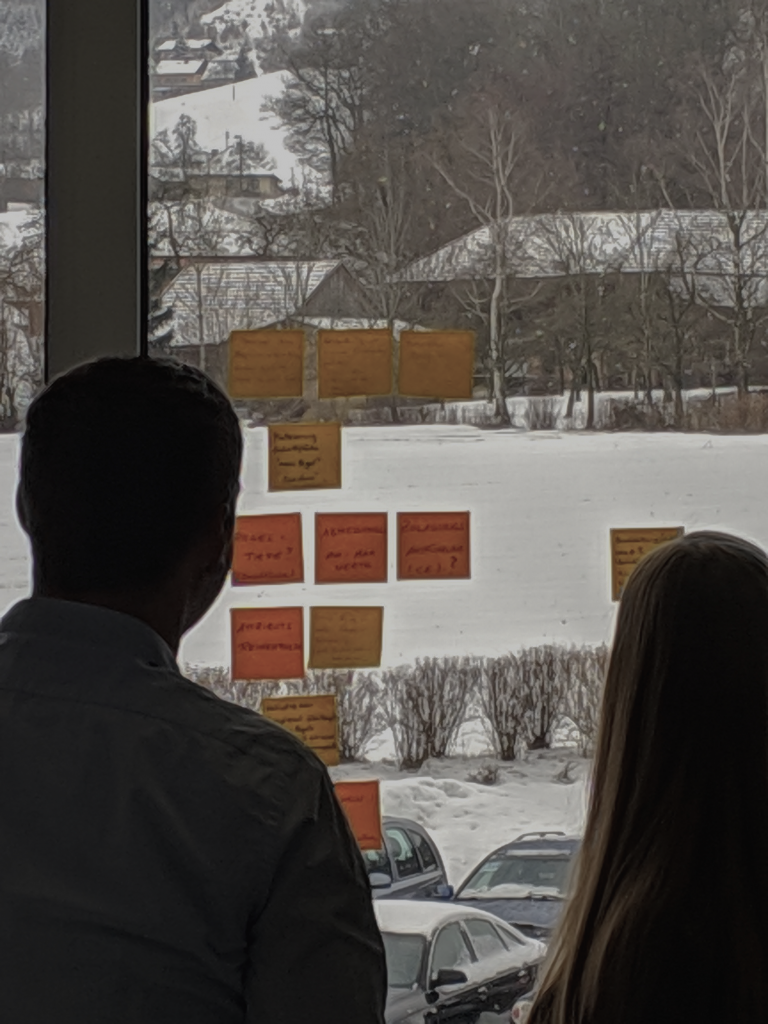
3. Customer journey mapping workshop
We visited several manufacturer customers of BIMsystems to collaboratively map their current journey — from product definition and rules configuration to ordering and publishing their content in our component library, waya.
Through these sessions, we discovered that manufacturers struggled to configure products in their own tools and found it frustrating to translate their data into the standard library attributes used in our system.
We identified clear opportunities to improve their configuration tools, support them in mapping attributes to the standard library, and enhance communication between manufacturers and BIM content developers during the 3D content approval process.
4. Content creation journey mapping
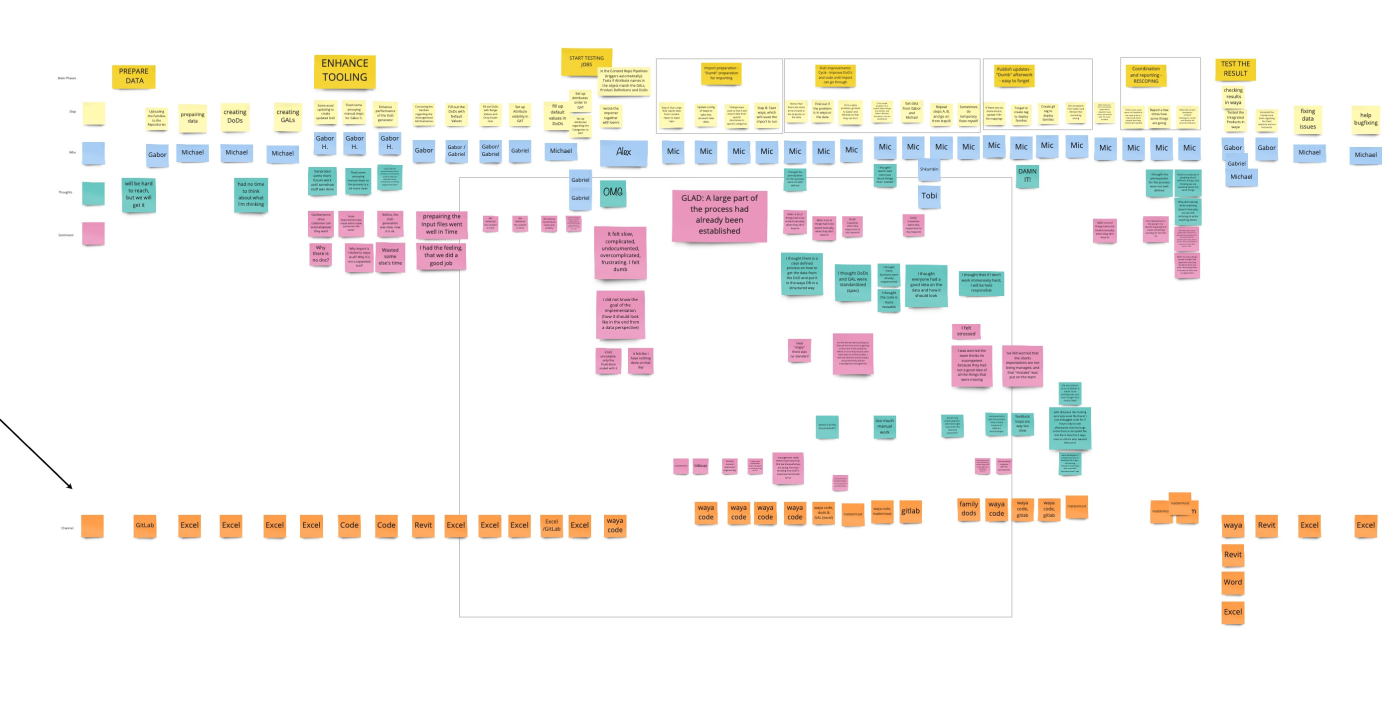
To be able to understand the systemic problems while ordering and publishing content by manufacturers, I decided to also organise an internal journey maping for content creation. Our content developers could explain their journey and map their pain points.
Having the perspective both from customers and content developers side, we could define better the process changes needed.
4. Target users & their needs
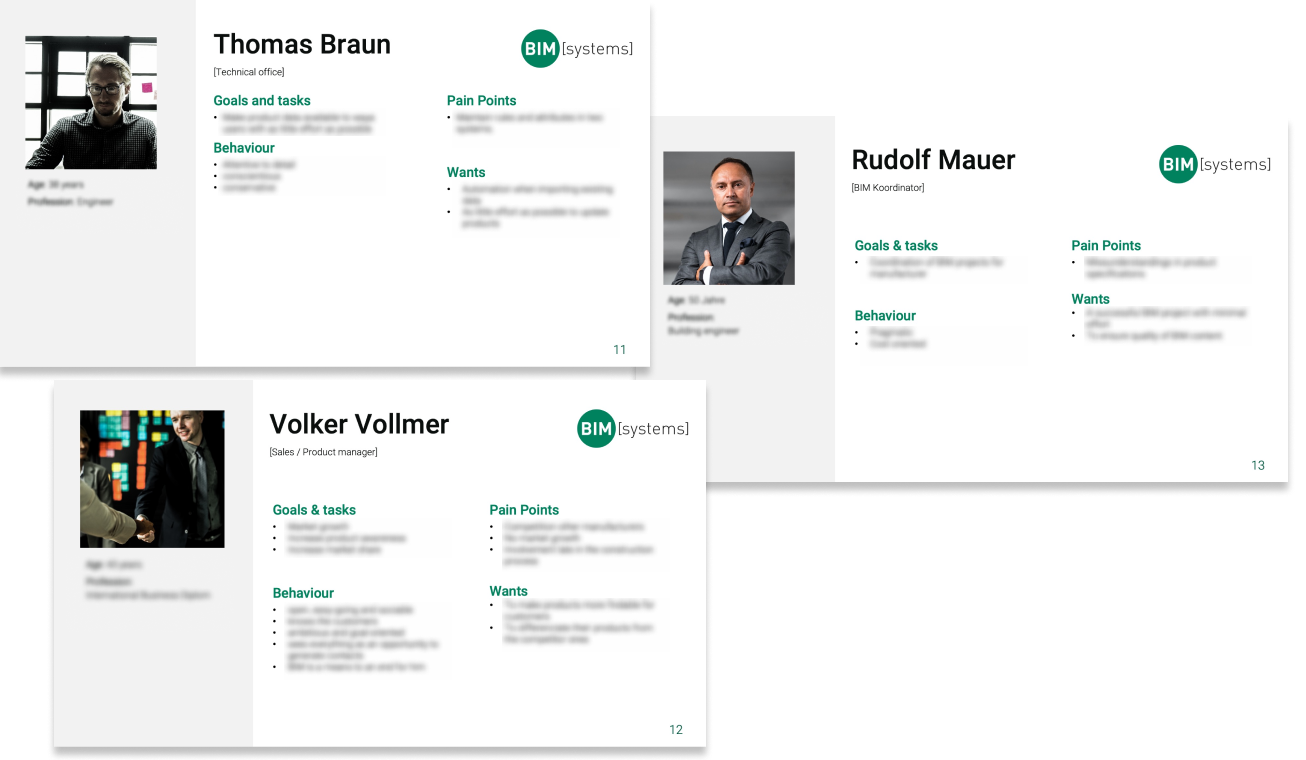
Based on our meetings with manufacturer user groups, we identified that technical office employees, Product managers and the BIM coordinator were involved in the BIM content creation process.
5. Journey redesign

4. Rules editor
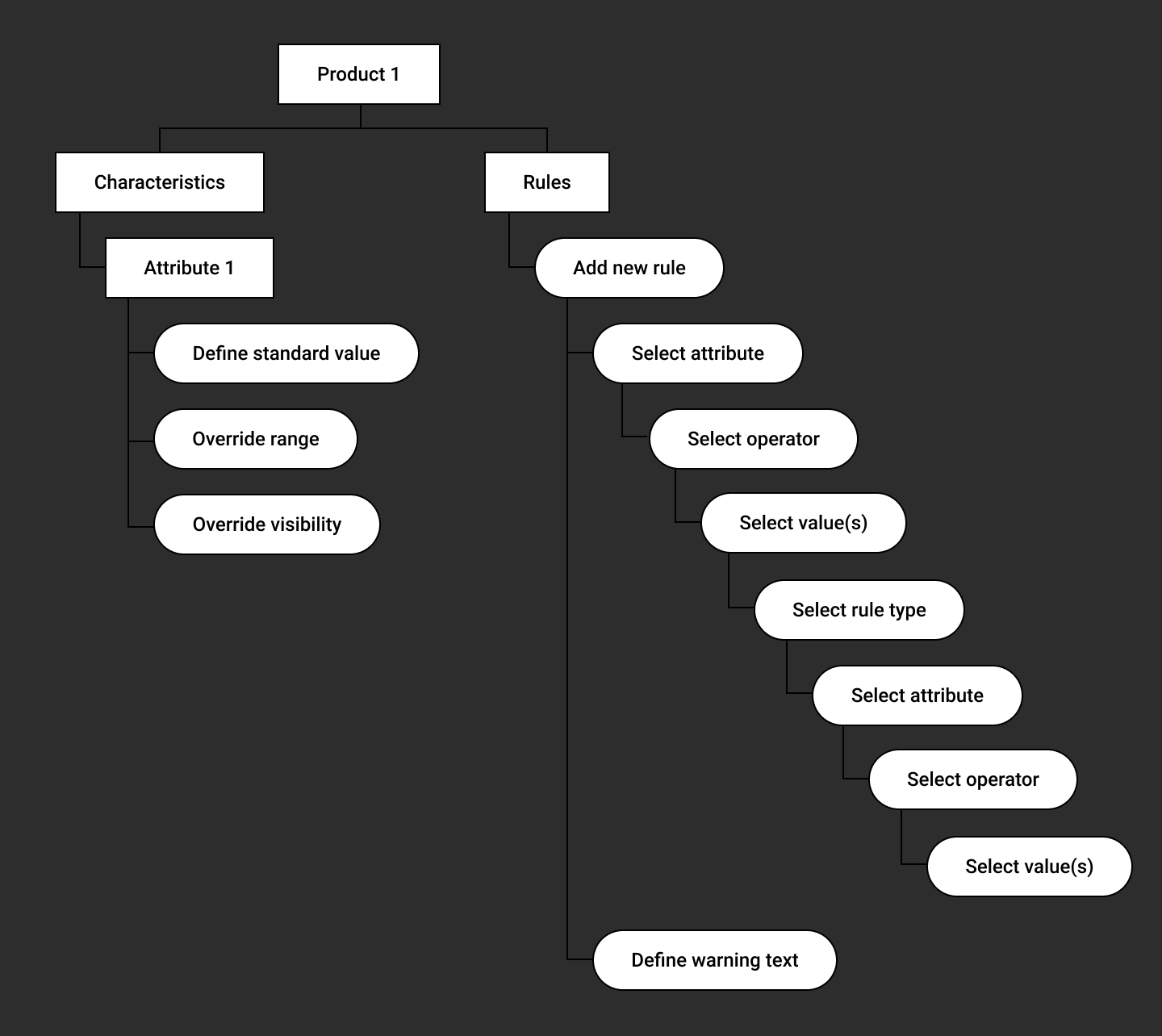
We learned from technical product managers about the type of rules and how they were created in their production software. This helped us to improve the rule creation process and decide where to integrate this tool in Linya.
We found out:
Rules should warn and help end users of BIM content (planners) to choose the right configuration of a product.
Rules are defined mainly per product.
Rules build up dependencies between attributes.
Impact & outcomes
Possitive feedback
Several licenses were sold for this product right after the development was ready.
Process improvement
Our content team became significantly more efficient and accurate in the content delivery.
Learnings
The biggest challenge of this project, was that some features were already partly developed and had different UI styles. In this project I learned to focus on providing the basic functionalities integrated first and then making usability and look and feel improvements.
Related articles